7 Proven Budget Management Tips to Boost Savings and Reduce Stress
CanDev Team
Table of contents
Discover 7 practical budget management tips to track spending, control expenses, build savings, and create a monthly budget that works in real life.
Managing money should not mean constantly worrying about bills, checking your bank balance, or wondering where your paycheck went. Yet many people reach the end of the month with less money than expected, even when they have a steady income.
The problem is not always how much you earn. Sometimes, it is the lack of a clear plan for where your money needs to go.
Effective budget management helps you understand your spending, prepare for upcoming expenses, and make room for financial goals without feeling restricted by every purchase. It is not about cutting out everything you enjoy. It is about making intentional decisions with the money you already have.
The challenge is building a system that works beyond the first few days of the month. A budget that looks perfect on paper but is difficult to maintain will not help much in practice.
In this guide, you will learn seven practical ways to manage your money, create a realistic monthly budget, choose useful budgeting tools, and build habits that make saving easier over time.
What Is Budget Management and Why Does It Matter?
Budget management is the process of planning, tracking, and reviewing your income and expenses so you can use your money more effectively.
A budget gives every dollar a purpose, whether that means paying rent, covering groceries, reducing debt, saving for an emergency, or enjoying your free time.
Without a plan, spending decisions happen individually. A coffee here, an online subscription there, and an unplanned shopping trip may not seem significant on their own. Together, however, they can leave little room for savings.
A good budget management system connects these everyday decisions to your bigger financial priorities.
It helps you:
Understand exactly where your money goes.
Identify spending categories that need attention.
Prepare for bills and expenses before they become urgent.
Set realistic savings goals.
Reduce financial surprises and make informed spending decisions.
The Consumer Financial Protection Bureau recommends reviewing actual spending, including less frequent expenses, rather than relying on what you think you should be spending.
That distinction matters. A useful budget reflects your real financial life, not an ideal version of it.
7 Proven Budget Management Tips to Boost Savings
1. Track Your Spending Before Changing Your Habits
One of the most common budgeting mistakes is deciding where to cut costs before understanding where the money goes.
Start by reviewing your bank statements, card transactions, bills, and receipts from the previous 30 days. If possible, look back over three months to identify expenses that do not occur every month.
Group your spending into categories such as:
Housing and utilities
Groceries and household essentials
Transportation
Subscriptions and entertainment
Shopping and personal expenses
Debt payments
Savings and investments
Pay attention to the difference between what you expected to spend and what you actually spent.
For example, you might estimate that you spend $250 a month on dining out, only to discover that the actual total is closer to $380. That $130 difference gives you something specific to work on.
You do not necessarily need to eliminate dining out. You could set a realistic limit of $300 and redirect the remaining $80 toward savings.
The practical takeaway: Track first, then make changes. Guessing leads to unrealistic limits, while actual spending data helps you set a budget you can maintain.
A budget tracker can make this process easier by organizing purchases into categories and showing how much you have spent against your limits.
2. Separate Essential Expenses From Flexible Spending
Not every expense offers the same flexibility. Rent, insurance, and minimum debt payments are generally harder to change quickly than restaurant visits, entertainment, or optional subscriptions.
Separating these expenses helps you see which decisions will make the biggest difference.
Start with three groups:
Essential expenses: Housing, utilities, groceries, necessary transportation, insurance, and required debt payments.
Flexible expenses: Dining out, entertainment, shopping, hobbies, and nonessential subscriptions.
Financial priorities: Emergency savings, additional debt repayment, and money set aside for future goals.
Some expenses fall between these categories. Groceries are essential, for example, but the amount you spend may still be adjustable. The aim is not to label every purchase as good or bad; it is to understand what you can reasonably change.
Consider someone taking home $3,000 each month. If essential expenses consume $2,200, they have $800 left to divide between flexible spending, savings, and other goals.
That is a more useful starting point than applying a strict percentage without considering their circumstances.
Review recurring payments, too. A subscription you rarely use may be an easy saving, while reducing a major housing cost may require a longer-term decision.
The practical takeaway: Protect necessary expenses first, then decide how to use the remaining money according to your priorities.
3. Build a Monthly Budget Around Your Actual Income
A budget should reflect the money you can reasonably expect to receive, not the income you hope to earn.
If your salary is predictable, use your regular take-home pay. If you are a freelancer, contractor, or self-employed worker, your income may vary from month to month.
In that case, review several months of income and build your spending plan around a conservative estimate. Avoid committing uncertain income to fixed expenses before you receive it.
Here is a simple monthly budget example for someone earning $3,000 after tax.
Category | Monthly amount |
Rent and utilities | $1,200 |
Groceries | $350 |
Transportation | $200 |
Insurance and healthcare | $150 |
Debt payments | $200 |
Dining and entertainment | $150 |
Personal and household spending | $150 |
Emergency savings | $300 |
Irregular expenses fund | $150 |
Flexible buffer | $150 |
Total | $3,000 |
This example is illustrative, not a recommended allocation for everyone. Your housing costs, family responsibilities, location, debt, and financial goals may require a different breakdown.
Notice that the budget includes an irregular expenses fund and a flexible buffer. These categories are important because real life rarely follows a perfectly predictable monthly schedule.
A budget that allocates every dollar to fixed commitments can become difficult to maintain when a prescription, repair, gift, or unexpected bill appears.
If your income changes, adjust flexible categories first and protect essential payments where possible. When you earn more than expected, decide in advance how much will go toward savings, debt, and discretionary spending.
The practical takeaway: Start with your actual take-home income, assign realistic amounts to each category, and leave room for expenses that are difficult to predict.
For a downloadable starting point, use the free Consumer.gov budget worksheet.
4. Set Realistic Savings Goals Before You Spend
Saving whatever happens to be left at the end of the month sounds reasonable, but it often fails because everyday spending expands to use the available money.
Instead, include savings in your budget from the beginning.
Start with a specific purpose. You might be building an emergency fund, preparing for a holiday, replacing a laptop, paying down debt, or saving for a future move.
Then turn the goal into a monthly amount.
For example, if you want to save $600 over six months, you need to set aside $100 per month, assuming you are starting from zero and ignoring interest.
If $100 is too much right now, begin with $25 or $50. A smaller amount that you can maintain is more useful than an ambitious target that forces you to borrow money before payday.
It can also help to separate savings into different goals. Money for annual insurance payments should not be confused with money intended for an emergency.
Where possible, automate transfers after payday. Just make sure the transfer timing works with your bill schedule and available balance so that you do not trigger overdraft fees or miss essential payments.
The practical takeaway: Give savings a specific purpose, choose an affordable contribution, and treat it as a planned part of your monthly budget.
5. Prepare for Irregular Expenses Before They Arrive
Some expenses are predictable even when they are not monthly. Car maintenance, annual insurance premiums, school costs, holiday gifts, and professional renewals can all disrupt a budget when you forget to plan for them.
The solution is to spread the cost across the months leading up to the payment.
Suppose your car insurance costs $600 annually. Setting aside $50 per month means the money is available when the bill arrives.
Use the same approach for other known expenses:
Expense | Expected annual cost | Monthly amount to set aside |
Car insurance | $600 | $50 |
Gifts and celebrations | $360 | $30 |
Annual subscriptions | $120 | $10 |
Total | $1,080 | $90 |
These amounts are examples. Use your actual bills and expected costs to calculate your own figures.
Keep irregular expenses separate from your emergency fund. An annual insurance payment is a planned cost, not an emergency. Your emergency fund is for genuinely unexpected financial setbacks, such as an urgent repair or an interruption to income.
If you have no money available for an upcoming bill, prioritize it based on the due date and consequences of missing payment. Adjust flexible spending where possible, and contact the provider early if you need to discuss payment arrangements.
The practical takeaway: Review the last 12 months of spending to identify costs that occur occasionally. Divide each expected cost by the number of months remaining before payment and save accordingly.
6. Review Your Budget Weekly Instead of Waiting Until Month-End
A monthly budget can tell you whether your finances are on track, but only if you check it while there is still time to make adjustments.
Waiting until the end of the month to discover that you overspent on groceries or entertainment limits your options.
Set aside 10–15 minutes once a week to review:
How much you have spent in each category.
Which bills are due before your next payday.
Whether any purchases were missed or categorized incorrectly.
How much remains available for the rest of the month.
Whether an upcoming expense requires an adjustment.
Imagine your monthly grocery budget is $400. After two weeks, you have spent $280. You now have $120 left for the rest of the month.
That does not automatically mean you have failed. It means you have useful information. You could plan simpler meals, use food already in the pantry, or move money from a flexible category if the overall budget allows it.
The same principle applies to subscriptions, transportation, and entertainment. Small adjustments made early are usually easier than trying to recover from a large shortfall at the end of the month.
A good budget management routine also allows for changes. If your electricity bill rises or an essential purchase becomes necessary, update the plan rather than pretending the original numbers still apply.
The practical takeaway: Review your budget every week, not to judge yourself, but to spot problems early and make informed decisions.
7. Use Budget Management Tools That Make Tracking Easier
The best budget management tools are the ones that help you maintain accurate records without creating more work than necessary.
Some people prefer a spreadsheet because it offers complete control over categories and calculations. Others prefer an app that organizes purchases, displays spending trends, and reduces manual data entry.
The right choice depends on your habits, the complexity of your finances, and how much time you want to spend maintaining the system.
Here are three common options:
Spreadsheets: Useful if you enjoy building your own budget and want control over formulas, categories, and reporting. However, you need to enter or import transactions consistently.
Banking tools: Convenient for reviewing transactions made through a particular bank or card. Cash purchases and spending across multiple accounts may need to be added separately.
Budget management software and apps: Helpful for people who want a clearer overview of spending, category limits, and financial trends without maintaining everything manually. Available features vary, so check what each tool actually supports.
When evaluating a budget management app, look for:
Clear expense categories and customizable budgets.
A simple way to record purchases.
Weekly or monthly spending summaries.
Support for your preferred accounts and currencies.
Export options if you need records for bookkeeping or taxes.
Transparent pricing, privacy practices, and data controls.
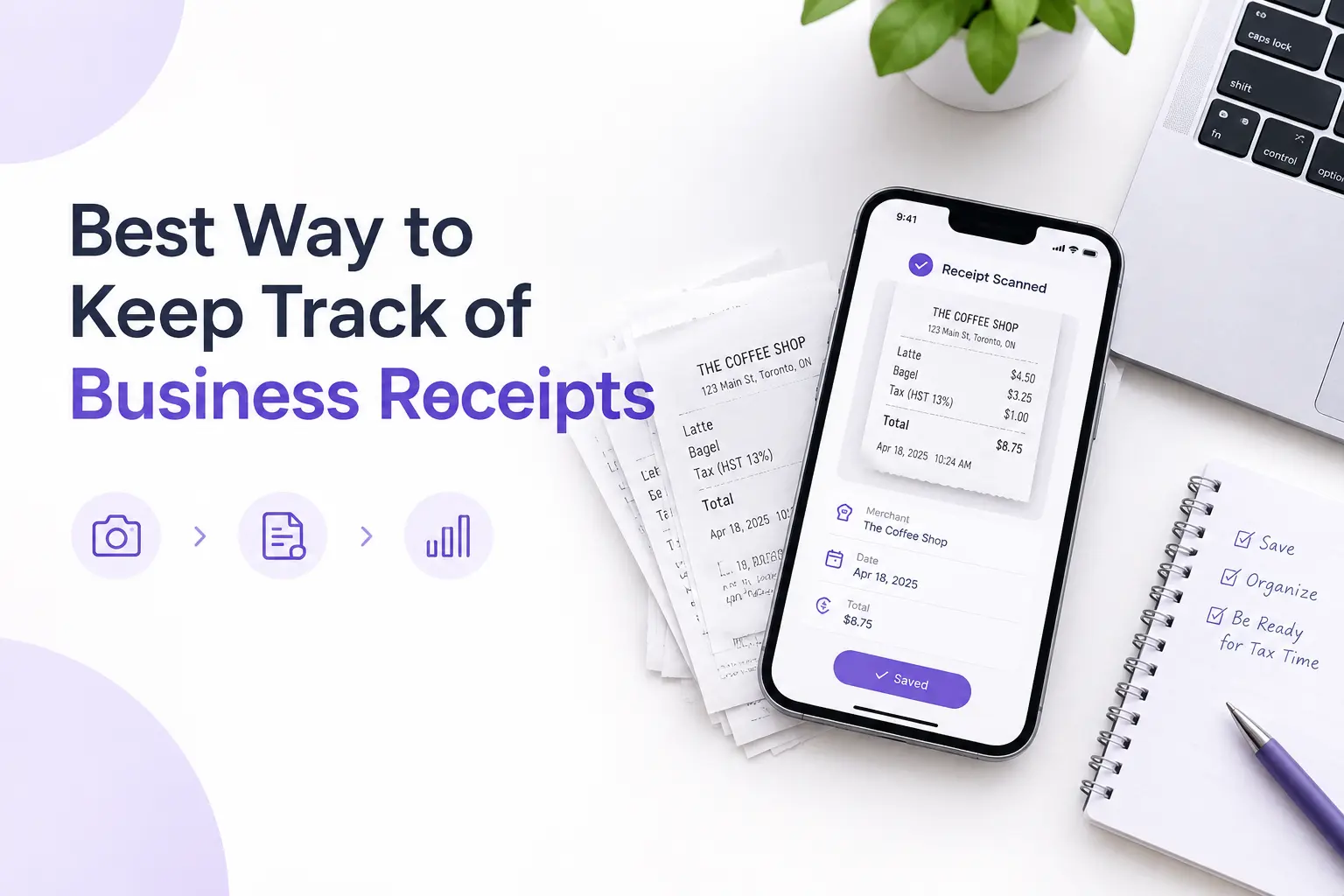
For example, Receni combines receipt scanning, expense categorization, budget tracking, and spending dashboards. You can scan receipts, review the extracted details, and use categorized spending to understand how purchases affect your budget. It also supports CSV exports for recordkeeping.
This approach can be especially useful when you make purchases in cash or want to retain receipt details that may not appear in a simple bank transaction list.
However, an app will not make financial decisions for you. You still need to set sensible limits, review your spending, and adjust your plan when circumstances change.
The practical takeaway: Choose tools that remove friction from your routine. A simple system you use consistently is more valuable than a complicated one you abandon after a week.
How to Create a Monthly Budget in 7 Practical Steps
If you are starting from scratch, follow this process to turn the tips above into a working plan.
Step 1: Calculate your take-home income. Add the money you expect to receive after taxes and payroll deductions. If your income varies, use a cautious estimate based on past earnings.
Step 2: List your fixed expenses. Include rent, insurance, minimum debt payments, utilities, and other regular commitments.
Step 3: Estimate variable spending. Review recent statements and receipts to calculate realistic amounts for groceries, transportation, shopping, and entertainment.
Step 4: Add irregular expenses. Include annual renewals, maintenance, gifts, and other nonmonthly costs by setting aside a monthly amount.
Step 5: Set savings and debt priorities. Choose a realistic savings contribution and decide whether additional debt repayment fits your circumstances.
Step 6: Check the numbers. Subtract planned expenses and savings from your take-home income. If the result is negative, revisit flexible spending and adjust the plan. If the numbers do not balance, do not assume that the shortfall will somehow resolve itself.
Step 7: Track and review. Record spending as it happens, check your progress weekly, and use the results to improve next month's plan.
A budget does not need to be perfect on the first attempt. Your initial plan is a starting point. The information you gather throughout the month helps you make it more accurate over time.
The 50/30/20 Budget Rule: Does It Work for Everyone?
The 50/30/20 rule is a popular budgeting guideline that divides after-tax income into three broad categories:
50% for needs: Essential expenses such as housing, basic groceries, utilities, necessary transportation, and minimum debt payments.
30% for wants: Discretionary spending such as dining out, entertainment, hobbies, and nonessential shopping.
20% for savings and debt goals: Savings, emergency funds, and additional debt repayment, depending on your priorities and how you classify payments.
For someone earning $3,000 per month after tax, the guideline would suggest $1,500 for needs, $900 for wants, and $600 for savings and debt goals.
The advantage is simplicity. It provides a starting framework without requiring you to create dozens of categories immediately.
However, the rule is not suitable for every financial situation. Someone living in a high-cost city may spend more than 50% of their income on essential housing and transportation. Someone managing high-interest debt or supporting dependents may need a different allocation.
Use the percentages as a reference, not a strict test of financial success. If your essential costs currently take up 65% of your income, forcing them down to 50% may be unrealistic. A more useful first step is to understand why they are high and identify changes that are genuinely achievable.
The best budget is the one that covers your needs, reflects your circumstances, and helps you make steady progress toward your goals.
Common Budgeting Mistakes That Can Derail Your Savings
Even a well-designed budget can become ineffective when the underlying habits are difficult to maintain. Watch for these common problems.
Setting limits that are too restrictive. If you eliminate every enjoyable expense, you may find the plan difficult to follow. Allow reasonable discretionary spending instead of relying on willpower alone.
Forgetting small purchases. Snacks, convenience fees, app subscriptions, and occasional online orders can add up. Record them rather than treating them as too small to matter.
Ignoring cash spending. A budget based only on card transactions will miss purchases made with cash. Keep receipts or record cash expenses as soon as possible.
Leaving out irregular bills. Annual fees, maintenance, and seasonal expenses can create a shortfall if you do not plan for them.
Confusing money available with money left to spend. Your bank balance may include money needed for a bill due tomorrow. Check upcoming commitments before making discretionary purchases.
Treating one bad week as a failure. An overspend is a signal to review the plan, not a reason to abandon it. Identify what happened and make a realistic adjustment.
Using too many tools. Maintaining several disconnected trackers can create duplicate work and inconsistent numbers. Choose one main system and use it regularly.
Strong budget management skills develop through repetition. The objective is not to predict every expense perfectly; it is to make better decisions as you learn more about your spending.
How to Know Whether Your Budget Is Actually Working
A budget is not successful simply because every category has a number assigned to it. It should help you make better financial decisions and reduce the uncertainty around everyday spending.
Review these indicators at the end of each month:
What to measure | What it tells you |
Planned vs. actual spending | Whether your estimates reflect reality |
Savings contributions | Whether you are progressing toward your goals |
Unplanned expenses | Whether you need a larger buffer or better preparation |
Upcoming bill coverage | Whether you have enough money available for near-term commitments |
Category overspending | Where your limits or habits may need adjusting |
Consistency of tracking | Whether your budget reflects all your spending |
You do not need to improve every measure at once. Start with the biggest issue affecting your finances.
For example, if you consistently spend more on groceries than planned, review several weeks of purchases before reducing the limit. The problem might be food prices, household size, frequent convenience purchases, or an unrealistic estimate.
If you have not saved anything for three months, look at whether your planned savings amount is affordable after essential expenses and debt payments.
Over time, your budget should become more accurate and easier to maintain. Progress may mean increasing savings, avoiding late fees, building a buffer for annual bills, or simply knowing that your essential expenses are covered.
Take Control of Your Spending With a Smarter Budget
Better finances do not require a complicated spreadsheet, strict rules, or a complete lifestyle overhaul. They require a clear picture of your spending, realistic priorities, and a system you can maintain.
Start by tracking your expenses, setting achievable limits, planning for irregular bills, and reviewing your progress each week. As your circumstances change, adjust your budget instead of trying to force your life into outdated numbers.
The most effective budget management system is not the one with the most categories. It is the one that helps you understand your money and make confident decisions with it.
If manual expense tracking makes it difficult to stay consistent, explore Receni's budget tracker to organize receipts, monitor category spending, and review your progress throughout the month.
Start with one small change today. Track your spending for the next seven days, identify one category to improve, and use what you learn to build a budget that works in real life.