How to Organize Receipts for Taxes: Easy Step-by-Step Guide
CanDev Team

Table of contents
Learn how to organize receipts for taxes with a simple, easy system. Covers US and Canadian (CRA) rules, digital tools, and mistakes to avoid.
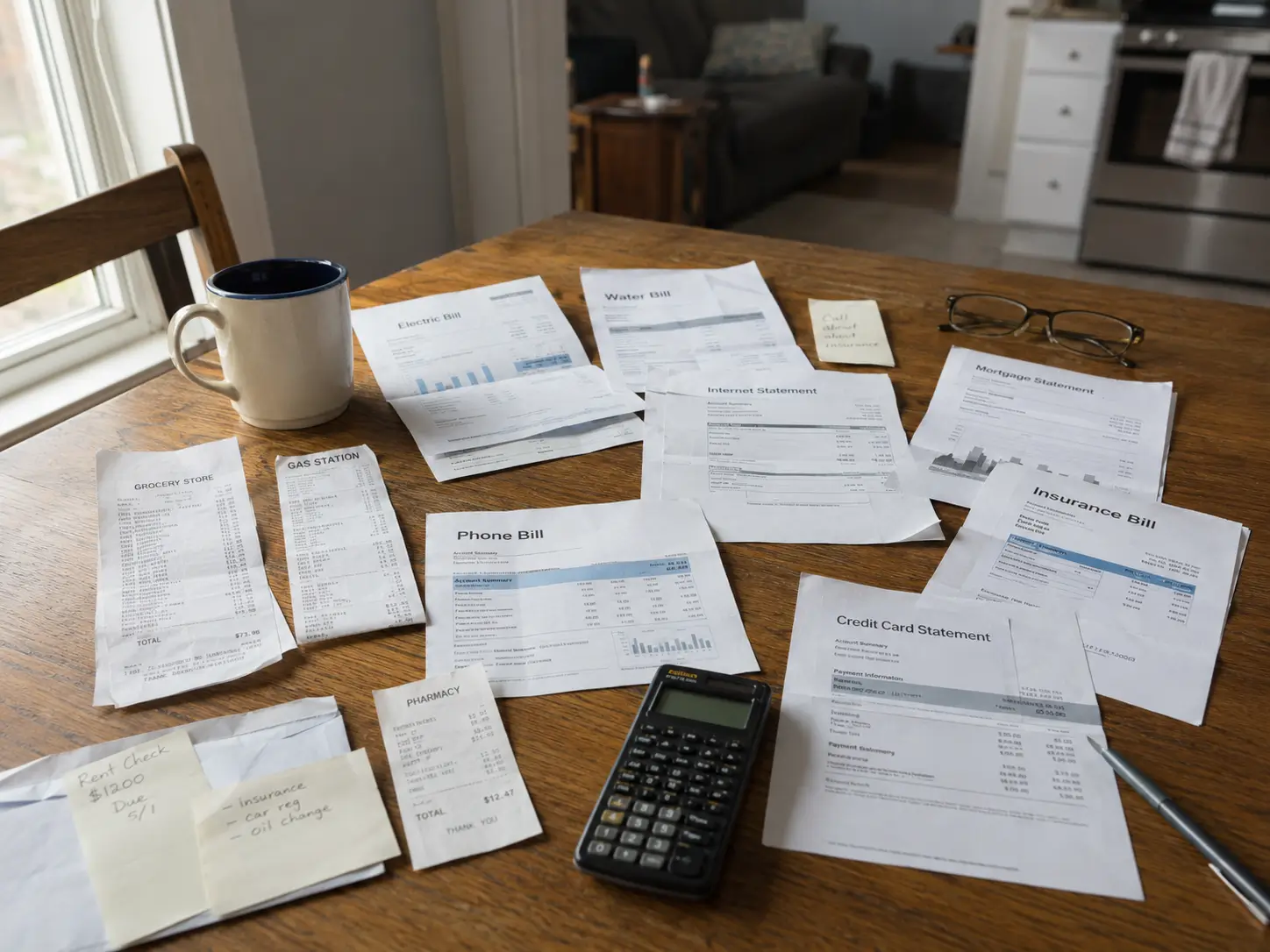
Got a drawer full of crumpled paper? You're not alone. Most of us don't think about how to organize receipts for taxes. Not until tax season hits. And then it's panic mode.
Here's a fun fact. The average person spends about 13 hours a year just doing taxes. A lot of that time? Hunting for lost paper. It doesn't have to be this way. This guide will walk you through how to organize receipts for taxes, step by step. Easy words. No fluff. And yes, we'll cover both the US and Canada.
Why Keeping Receipts for Taxes Actually Matters
Let's start with the "why." Receipts for business expenses are proof. They prove you spent money on your work. Without that proof, you can lose your tax deductions.
Here's what good receipt habits give you:
Bigger deductions. You can only claim what you can prove.
Faster tax filing. No more digging through bags at the last minute.
Audit protection. If the tax office ever asks questions, you'll have answers ready.
Keeping receipts for tax purposes isn't about being a neat freak. It's about saving money and saving stress.
What Receipts Should You Keep?
Not everyone needs the same pile of paper.
Are you self-employed or a freelancer? Save receipts for office stuff, software, business trips, meals with clients, and gas mileage.
Own a home? Keep receipts for repairs and upgrades. They can lower your tax bill later when you sell. Also save your mortgage interest slips and property tax bills.
Got medical bills? Hang onto receipts for prescriptions, doctor visits, and travel to appointments.
A parent or caregiver? Keep tuition slips, daycare bills, and books.
Not sure if something counts? Keep it anyway. You can always toss it later. You can't un-lose it.
Step-by-Step: How to Organize Receipts for Taxes
A simple way to organize receipts for taxes. No fancy tools needed.
Step 1: Pick one spot. A folder.An app. Doesn't matter which. Just pick one and stick with it.
Step 2: Sort by category. Group receipts into simple buckets, like travel, supplies, and meals.
Step 3: Snap a photo fast. Paper fades. Ink disappears. Snap it the second you get it.
Step 4: Write a tiny note. "Lunch with Sarah, client meeting." Trust us, future you will thank you.
Step 5: Back it up. Phone plus cloud folder. Two spots, not one.
Step 6: Check in monthly. Five minutes a month beats five hours in tax season.
Want to skip most of this? Receni's receipt scanner does the sorting and backup part for you.
Best Categories for Organizing Receipts for Business Expenses
Keep your list short. Try these:
Office and supplies. Travel and gas. Meals. Software. Ads. Professional fees. Rent or utilities.
That's it. More categories just means more confusion later.
Digital vs Paper: Which is Best to organize receipts for taxes?
Both can work. But paper fades. Store receipts get printed on thin, shiny paper. Give it six months and it's blank.
Digital wins because you can search it. Type a word, find the receipt. No digging through drawers at midnight. The IRS says a clear photo or scan works fine, as long as it shows the date, store, and amount.
If you like paper as a backup, that's fine too. Just don't rely on it alone.
How Long to Keep Receipts for Taxes
Retention rules depend on where you live and what the receipt is for. Here's a simple breakdown:
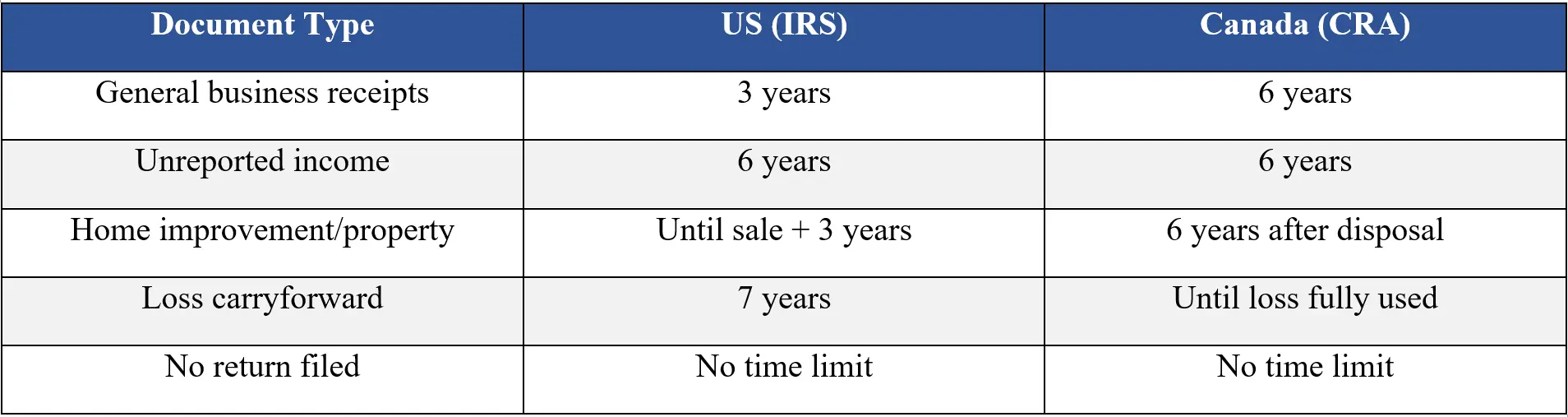
For US filers, the IRS record keeping page confirms these general timeframes. When you're not sure, it's safer to hold onto records a little longer than needed.
How Long to Keep Receipts for Tax Purposes in Canada
If you live in Canada , the CRA wants you to keep receipts for six years. That's six years from the end of the tax year they're tied to. So a 2026 receipt sticks around until the end of 2032.
Some things stretch that even longer. Fighting the CRA over something? Keep records until it's settled. Carrying a business loss forward? Keep proof until you've used it all up. And you can't just toss records early either. You'd need the CRA's written okay first.
Common Mistakes People Make When They Organize Receipts
Watch out for these.
Mixing business and personal spending in one wallet. Big mess later.
Waiting until tax season to sort anything. By then you've forgotten what half these receipts even were.
Skipping the notes. A blank receipt from March is a mystery in December.
Trusting paper alone. One spilled coffee and it's gone.
No backup plan. Phone dies, and so do your records.
Best Practices for Organizing Receipts for Taxes
Want your system to actually hold up if the tax office ever asks questions? Follow these best practices.
Follow the Rules for What Counts as a Valid Receipt
N ot just any scrap of paper works. A real receipt should show:
The date you bought it
The store or vendor name
What you bought
How much you paid
How you paid (cash, card, etc.)
Here's a handy shortcut. The IRS "$75 rule" says you don't need a receipt for most business expenses under $75. But you should still write it down somewhere. Don't skip that part.
Why it matters: If your records match what the IRS expects, your deductions are much harder to challenge.
What Extra Proof You Might Need
Some expenses need more than a receipt. Buying a client lunch? Write down who was there. And why. Driving for work? Keep a mileage log. Add dates and the trip's purpose.
Why it matters: A receipt alone doesn't always prove the business reason. A quick note does.
Keep Records for the Right Amount of Time
Different papers need different retention periods. Here's a simple table for common ones:
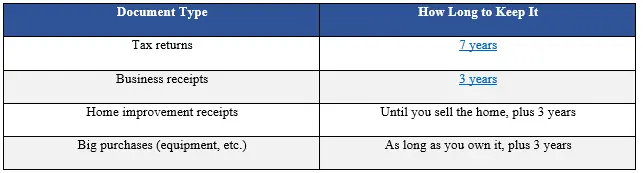
Why it matters: Hold onto the right papers long enough, and you're covered for audits, home sales, or warranty claims.
Stick to a Routine
This is the boring part. But it's the part that actually works. Set a weekly or monthly time to deal with new receipts. Don't let them pile up in a bag somewhere.
Freelancers and small business owners? Monthly works well. Homeowners? Quarterly is usually enough, especially for bigger purchases.
Why it matters: A little upkeep now beats a giant mess later. And it means you won't miss a deduction just because a receipt got buried.
What Happens If You Lose a Receipt?
It happens. A receipt fades. Or gets tossed by mistake. Or just vanishes. Here's the good news. Losing one receipt doesn't mean losing the deduction.
Both the IRS and the CRA allow backup proof. This works when the original receipt is gone. Backup proof can be:
Bank or credit card statements
Canceled checks
Email confirmations
Store account history
In the US , there's a rule called the Cohan rule . It lets you estimate a cost using other proof. You just need to show the expense was real. And that the amount makes sense. It's not a free pass to guess numbers. But it gives you some room if paperwork goes missing.
In Canada , the CRA wants the same kind of backup. Bank records or vendor statements work well if you can't find the original receipt.
Either way, do this: write a quick note. Say what you bought. When. Roughly how much. And why the receipt is missing. That small step can save a deduction later.
Why it matters: One lost receipt shouldn't cost you money. Not if you can back it up another way.
Simple Tools to Make Organizing Receipts Easier
You don't have to do this by hand. A good receipts organizer app snaps the photo, sorts it, and backs it up. All in one go.
That's the whole idea behind Receni's receipt scanner. Scan it, and the app handles the rest.
Wrapping Up
Learning how to organize receipts for taxes really isn't hard. Pick a system. Stick to it. Check in once a month. Whether you freelance, own a home, or just want your life a little less messy, this habit pays off big time when tax season shows up.
Ready to make it easier? Try Receni and turn receipt chaos into something that takes five minutes, not five hours.