
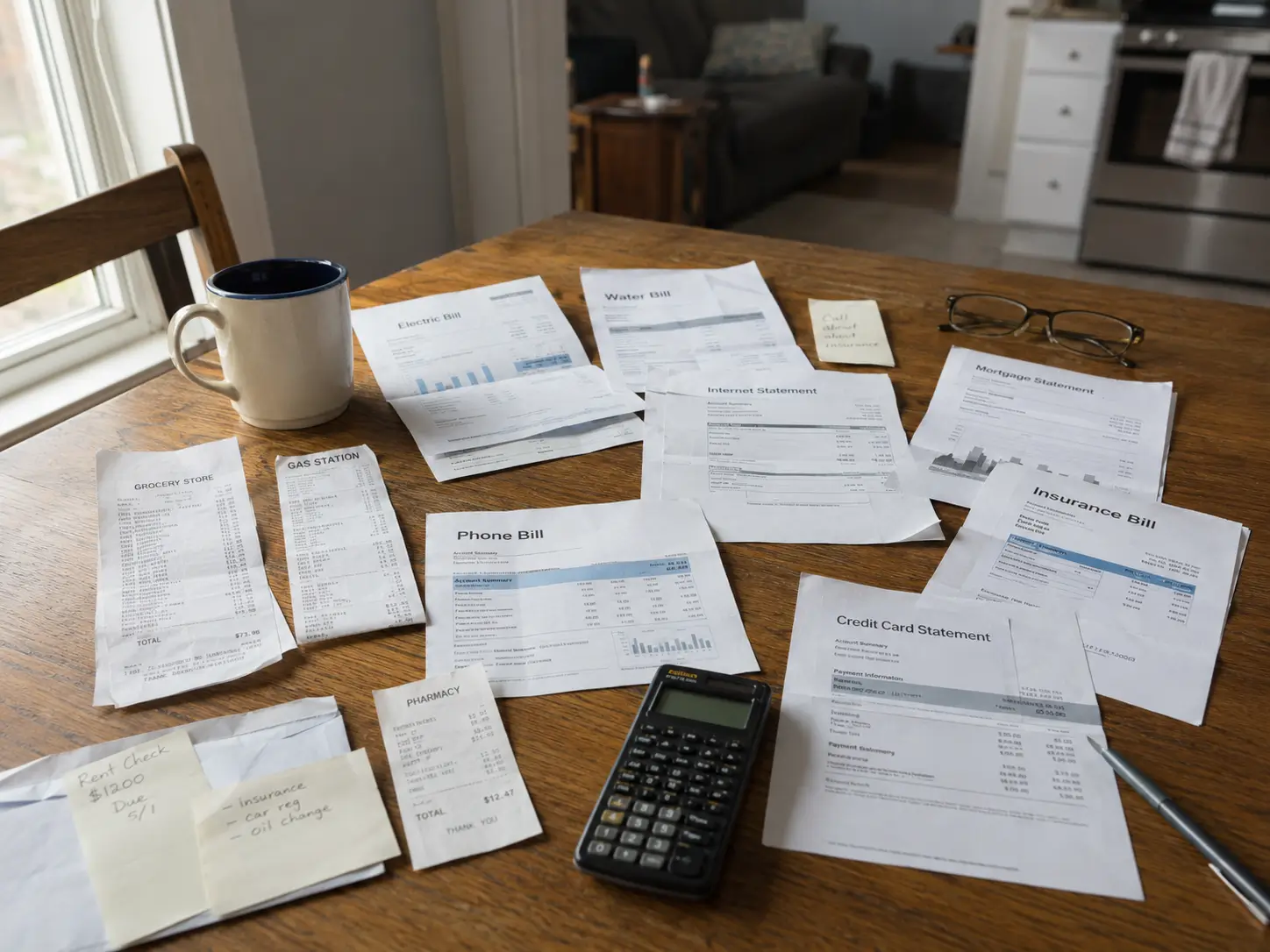
Tired of missing bill payments and losing receipts? Here's the best app for tracking monthly bills, organizing expenses, and finally staying on top of your money without the stress.
You know the feeling. A bill payment you completely forgot about. A late fee that shows up out of nowhere.
If you're nodding along right now, you're not bad with money. You just don't have a system. And honestly, most people don't.
In this guide, we'll walk through what to actually look for in a bill tracker and expense organizer, why most people give up on tracking their spending within the first month, and which app makes the whole process almost effortless. By the end, you'll know exactly how to stop missing payments and start feeling in control of your money again.
Let's get into it.
Why You Keep Missing Bill Payments
Most people assume missing a payment means they're bad with money. That's rarely the real reason. The actual problem is almost always visibility. Your electricity bill is due on the 5th, your phone bill on the 12th, your credit card statement closes on the 18th, and none of it lives in one place. You're juggling dates from memory, or worse, from a pile of paper mail you'll "deal with later."
Add receipts into that mix. Every grocery run, every gas fill up, every random Amazon order adds another piece of paper or email confirmation you're supposed to remember and account for. By the time tax season or budget review rolls around, you're staring at a mess with no real starting point.
This isn't a willpower problem. It's a system problem. And systems are fixable.
What Actually Makes a Bill Tracker or Expense Organizer Worth Using
Before picking any app, it helps to know what actually matters versus what's just marketing. Here's what we'd look for:
Automatic reminders before a bill is due, not on the day it's due. A reminder the morning a payment is already late doesn't help anyone.
Easy expense logging that doesn't require typing everything by hand. If an app makes you manually enter every transaction, you'll use it for a week and quit.
One place for everything. Bills, receipts, and general spending shouldn't live in three different apps. That defeats the entire purpose of organizing in the first place.
Clear visibility into where your money actually goes. Categories, totals, and trends matter more than a fancy dashboard with charts nobody understands.
Works on your phone. If you have to sit at a computer to log something, you'll forget by the time you get home.
The Real Stress Behind Bill and Expense Tracking
Here's something that doesn't get talked about enough. The stress isn't really about the bills themselves. It's about the uncertainty. Not knowing if you've paid something. Not knowing how much you actually spent last month. Not knowing if that $40 charge was for groceries or something you forgot about completely.
That uncertainty is what causes the anxiety, not the actual numbers. Once you can see everything clearly, even if the numbers aren't great, the stress drops fast. People consistently report feeling more in control the moment they can actually see their spending laid out, even before they've changed a single habit.
How Receni Solves the Receipt & Expense Side of This
We're going to be upfront here since this is our own product, but we built Receni specifically because we were tired of the mess ourselves.
Instead of typing every receipt into a spreadsheet, you just take a photo. Receni's AI reads the merchant name, date, line items, tax, and total automatically. Takes about 5 seconds per receipt. No manual entry, no squinting at faded thermal paper trying to remember what you bought.
Every scanned expense gets categorized automatically too. Groceries, gas, office supplies, dining, whatever fits your life. You can see your spending broken down by category and date range whenever you want, instead of guessing at the end of the month.
If you're running a small business or freelancing, Receni also lets you keep separate workspaces for personal and business expenses. When tax season comes, you export everything as a clean CSV file in one tap and send it straight to your accountant.
It won't remind you about your electricity bill due date specifically, since that's more of a bill calendar function. But for the receipt chaos and expense tracking side of things, which is honestly where most people lose the most time, it removes almost all the manual work.
A Simple System That Actually Works Long Term
If you want something realistic that you'll actually stick with, here's what we'd suggest.
Use a calendar reminder or a dedicated bill tracker app for recurring bill due dates. Set it once and forget it.
Use Receni or a similar receipt scanner for every purchase and expense as it happens, not at the end of the week when you've forgotten half of it.
Check your spending categories once a week, just for 5 minutes. Not to judge yourself, just to stay aware.
Export a report once a month so you actually see the full picture instead of fragments.
That's it. No spreadsheets to maintain, no apps to babysit, no Sunday afternoon sorting through a shoebox of paper.
The Bottom Line
Missing payments and losing receipts isn't a personality flaw. It's what happens when your financial life lives in too many places at once. The fix isn't more discipline. It's fewer places to look.
Pick one tool for bill reminders and one tool for expense tracking, and let automation handle the parts that used to eat your time. Scan instead of type. Get reminded instead of remembering. That's really the whole shift.
If you want to try the expense side of this, Receni is free to start on iOS and Android, no credit card required.